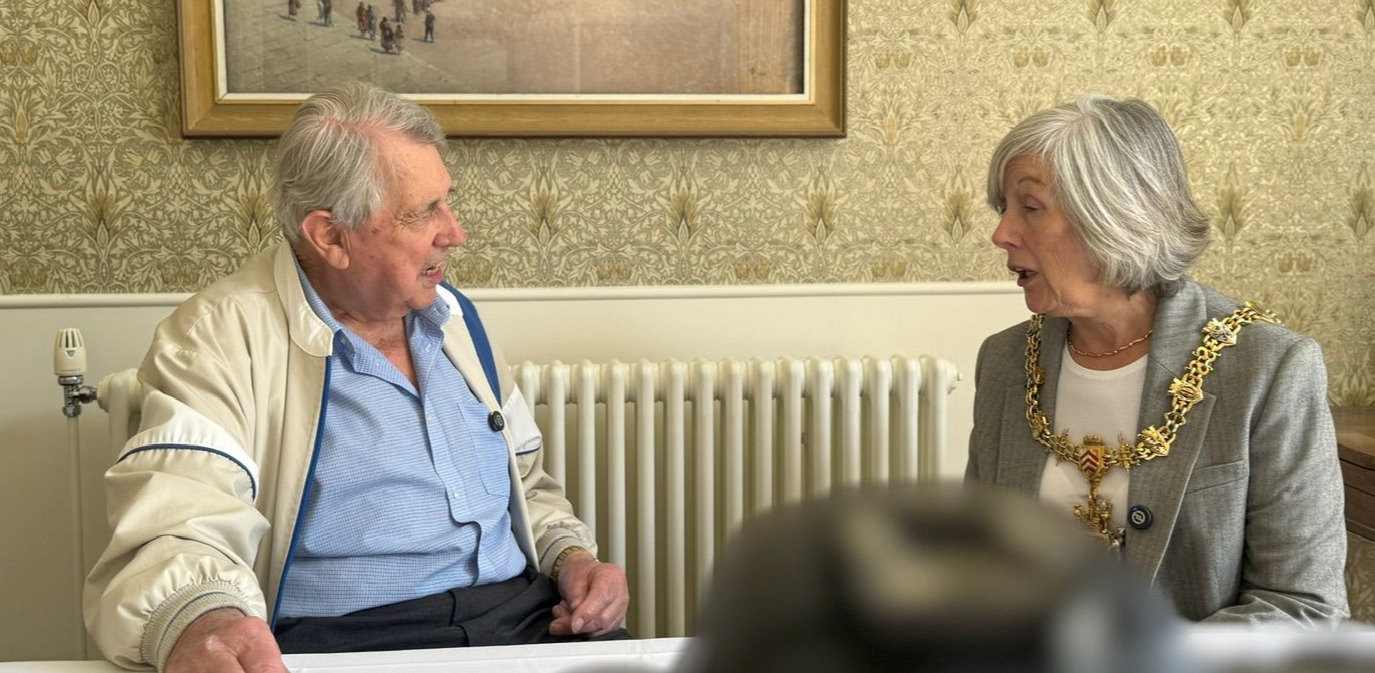
Swan TV met the Lord Mayor of Swansea, Cllr Cheryl Philpott at the Mansion House to hear about the highlights of her year in Office. She kindly walked through the building talking about it’s history and then a detailed description and history of the mayor chain of office. Each year a new Mayor is elected and the year starts in May. This year the new mayor is installed on 15th May.
Swansea’s Mansion House is situated in Ffynone and was originally called “Brooklands”. The house was completed in 1863 when the owner Evan Matthew Richards, a well known local builder, made it his family home. He was in fact Mayor of Swansea in 1855 and 1862. After his death in 1880 Brooklands was sold twice before being purchased by the then County Borough of Swansea in 1922 with the intention of making it an official residence for the Mayor. From then on it was renamed the Mansion House.
From 1923 until 1975 the house also served as lodgings for visiting judges and on such occasions the Mayor had to vacate the premises.
The house maintains many of its original features such as the Victorian tiled entrance hall, the mahogany staircase which showcases the large stained glass window commemorating the original owner and his family, and the white Italian marble fireplaces.
The external appearance has changed little from when it was built in 1863. Much of the furniture and paintings are from the Vivian collection and as such are the custodian responsibility of the Glynn Vivian Art Gallery and Museum. The house also contains a considerable collection of silverware presented to Swansea over a number of years.
On the terrace in front of the south-west wings are a sundial and two brass six-pounder cannons. The cannons were cast in 1804 in Woolwich, at a cost of £296 13s.
The money was raised in Swansea by local merchants and ship owners, called in 1803 to discuss the purchase of four six-pounder cannons for the defence of the harbour against possible attack by the French. The threat of invasion by Napoleon and the memory of the French descent on Fishguard in 1797 must have been very much in people’s minds at the time. The guns arrived in Swansea on Saturday 14 July 1804, and were placed in the charge of the Sea Fencibles.
The installation of the battery at Mumbles Head in the 1860s rendered the cannons obsolete, and they were acquired by the corporation. The guns were never fired in anger.